
How to Design a Small Backyard Pool Patio That Feels Bigger
Last Updated: November 10, 2026
Quick Summary
A small backyard pool patio feels bigger when the layout keeps clear sightlines, wider walkways and multi-use furniture. Choose light to mid-tone pavers with a textured finish for safer wet footing and a cooler surface, and plan drainage early.
- Start by sketching the pool and patio together to test how people will move between them.
- Choose light to mid-tone colours, since they reflect more sunlight and help the space feel open.
- Pick a textured paver finish, because polished surfaces become slippery when pool water is on them.
- Use built-in bench seating along one edge to save floor space and store cushions and pool toys.
- Plan drainage and base preparation carefully, because freeze-thaw cycles are the main threat to a paver patio.
Table of Contents
- Why Small Backyard Pool Patios Need a Different Plan
- Choosing Pool Patio Paver Ideas for Compact Yards
- Pool Landscaping Ideas for Small Yards
- Pool Patio Seating Ideas That Fit Tight Layouts
- Small Backyard Pool Privacy Ideas Without Crowding the Space
- Budgeting and Booking Your Small Pool Patio Project
- Frequently Asked Questions
Why Small Backyard Pool Patios Need a Different Plan
A small backyard pool patio has less room for error than a large one.
At Ciscon Landscaping, we treat a small yard as a puzzle.
Small pool patios also face different pressures than large ones. Traffic from the house to the pool is constant, so the layout has to flow.
Here is what usually changes when the yard is small:
- Clear sightlines matter more. Views from the house should not be blocked by clutter.
- Walkways need to be wider. Wet feet and towels create traffic on a tight path.
- Every feature needs a job. A bench that also stores pool toys saves real space.
- Shade and privacy are harder to add. Plan them early, not as an afterthought.
A common mistake is copying a design from a large property. A wide, curved patio with multiple lounge zones will overwhelm a small lot.
Choosing Pool Patio Paver Ideas for Compact Yards
Pavers are one of the most practical surfaces for a small pool patio. They are easy to shape around a pool edge, and they can be laid in patterns that guide the eye across the space.
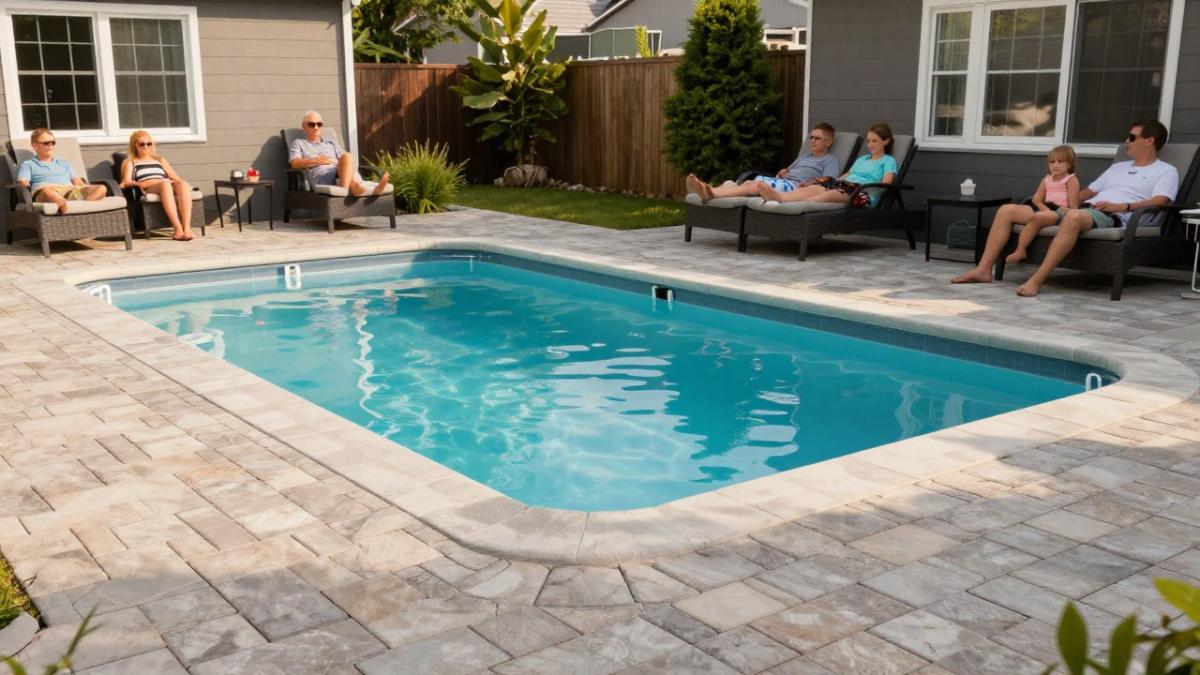
For compact yards, simple shapes usually work best. Rectangular or gently curved borders keep the lines clean. Busy patterns can make a small space feel even smaller.
Comparing Pool Patio Materials Side by Side
Most pool patio guides show photos without explaining how the surface behaves under wet feet, bare skin and freeze-thaw cycles. Here is the practical comparison that matters in a small yard.
- Concrete pavers. The most common choice around compact pools. Slip resistance depends on the finish; a textured or tumbled face is safer wet than a polished one. They stay cooler underfoot than dark natural stone, are easy to lift and replace if one cracks, and handle freeze-thaw well when installed on a properly compacted granular base. Expect a mid-range installed cost per square foot, quoted in CAD after a site visit.
- Natural stone (flagstone, travertine, bluestone). Attractive and long-lasting, but heavier, more expensive to install, and variable in slip resistance. Some stones stay noticeably hotter in direct sun, which matters on a small patio where there is little shade. Sealing is often recommended and adds an ongoing cost.
- Composite decking. Warmer underfoot than stone and comfortable for bare feet, with good slip resistance when wet. It needs a framed substructure, so it can raise the finished height and complicate the pool edge detail. It also expands and contracts with temperature, so spacing and fasteners must be specified correctly.
- Gravel or crushed stone. The lowest-cost option and excellent for drainage, but unsuitable as a primary walking surface next to a pool because loose stones track into the water and are hard on bare feet. Best used as a border or utility strip, not the main patio.
Watch out: a paver that looks perfect in a showroom can become dangerously slick once pool water and sunscreen are on it, so always test a wet sample underfoot before ordering.
Colour, Heat and the Illusion of Space
Light colours reflect more sunlight and help a small patio feel brighter and more open. Warm greys, soft beiges and light sandstone tones are popular because they hide dirt well and pair easily with most pool finishes. Dark pavers can look striking, but they absorb heat and show every leaf and splash. In a small yard, a mid-tone colour often balances the look with comfort underfoot.
Consider these points when choosing materials:
- Pick a light to mid-tone colour for a more open feel.
- Use one main colour and add a contrasting border if you want definition.
- Test samples in your actual sunlight before committing to a large order.
- Check the surface texture. Smoother finishes are easier to keep clean, but they can get slippery when wet.
Drainage, Freeze-Thaw Performance and Base Preparation
Drainage is the part of a pool patio most people never see, and it causes the most problems later.
Freeze-thaw cycles are the main threat to a paver patio in most of the country.
Key points for a durable base:
- Excavate to the right depth so the base has room for compacted material.
- Use compacted granular layers that drain well and resist shifting.
- Slope the surface gently away from the house and the pool.
- Include a proper edge restraint to keep pavers from spreading apart.
Base preparation is not the visible part of a project, but it decides how the patio performs.
The article compares the main pool patio materials on the properties that matter in a small yard.
| Material | Main advantage | Key drawback |
|---|---|---|
| Concrete pavers | Slip resistance depends on finish; easy to replace | Polished finish gets slippery when wet |
| Natural stone | Attractive and long-lasting | Heavier, costlier, can run hot in sun |
| Composite decking | Warm underfoot, good wet grip | Needs framed substructure; expands with heat |
| Gravel or crushed stone | Lowest cost, excellent drainage | Tracks into pool; hard on bare feet |
| Poured concrete | Often the most economical per square foot | Slippery when wet and cracks over time |
Pool Landscaping Ideas for Small Yards
Landscaping can make a small pool area feel like a retreat. The right plants soften hard edges, add privacy and hide utility areas without taking up floor space. But plants near a pool are not the same as plants in a garden bed.
Vertical planting works well in tight spaces. Tall shrubs or narrow evergreens along the fence line add height and a sense of enclosure without blocking light.
Choosing Pool-Tolerant, Low-Litter Plants
Most landscaping lists name plants that look good but say nothing about how they behave next to water. In a small yard, a messy plant is a daily chore. Favor compact, low-litter varieties and keep the following in mind:
- Avoid heavy fruit and flower drop. Plants that shed berries, seed pods or large petals send debris into the pool and clog the skimmer.
- Choose compact, slow-growing shrubs. Fast growers need constant pruning to stay out of walkways and away from the pool edge.
- Prefer evergreens for structure. Narrow evergreens and boxwood-type shrubs hold their shape and provide year-round screening without seasonal leaf drop.
- Use ornamental grasses carefully. They move beautifully in wind and need little trimming, but some self-seed and can spread into beds and joints.
Watch out: aggressive root systems from trees and large shrubs can lift pavers and invade pool plumbing, so keep woody plants well back from the pool structure and check root habits before planting.
Root, Debris and Chemical-Splash Considerations
Plants close to a pool face three pressures that garden plants do not. First, roots compete for water and space in a narrow bed, and vigorous roots can heave pavers or find their way into joints. Second, debris from leaves, flowers and fruit lands directly in the water, raising chlorine demand and skimmer workload. Third, splash and overflow expose plants to pool chemicals, and not all species tolerate that.
A practical approach is to layer the planting. Put the most pool-tolerant, lowest-litter plants closest to the water, and reserve taller screening shrubs for the fence line where debris is less likely to reach the pool.
Practical landscaping ideas for small yards include:
- Narrow shrub borders along the fence for year-round greenery.
- Raised planters that add color without spreading into walkways.
- Ornamental grasses that move gently and need little trimming.
- Container plants that you can move as the season changes.
Choose plants that suit your sun exposure and that tolerate pool chemicals and splashing. Choosing resilient plants that frame the pool without crowding the patio can transform your outdoor space into a more open, restful retreat.
Pool Patio Seating Ideas That Fit Tight Layouts
Seating decides how much a small pool patio gets used. The goal is enough places to sit without crowding the walkways or blocking the pool entrance.
Built-in benches along a wall or fence save floor space compared with loose chairs. They also provide storage underneath for cushions and pool toys.
Seating ideas that work well in tight layouts:
- Built-in bench seating along one edge of the patio.
- A single lounger placed at the sunny end of the pool.
- A small round table with two chairs instead of a full dining set.
- Stackable or folding chairs that you can clear away easily.
Avoid placing all the seating in one spot. Spreading it out keeps traffic moving and gives people room to change positions during the day.
Small Backyard Pool Privacy Ideas Without Crowding the Space
Privacy is often the biggest concern for homeowners with small yards, since neighbours are usually close.
Start with the fence and work inward. A solid fence can feel heavy, so consider a lattice top or slatted panels that let in light and air.
Privacy options that suit small yards include:
- Lattice or slatted fence toppers that block sightlines without a wall effect.
- A pergola with climbing plants that adds shade and screening overhead.
- Tall, narrow shrubs placed where they block the main views.
- Frosted or textured panels for a private corner without full coverage.
A pergola can give shade and privacy in one structure, but it should be sized to the space. An oversized pergola can take over the whole patio.
Budgeting and Booking Your Small Pool Patio Project
Budgeting for a small pool patio involves more than the pool and the pavers. Excavation, base materials, drainage, fencing, lighting, plants and furniture all add to the total.
Pricing depends on the size of the project, the materials chosen, site access and the level of design work.
When you are ready to move forward, these steps help:
- Measure the yard and note sun, shade and drainage patterns.
- Set a realistic budget range that includes a contingency.
- Compare written quotes that list materials, labour and timelines.
- Confirm the warranty and maintenance plan before signing.
Ask about the project timeline as well, since weather and seasonal demand can affect scheduling. Planning ahead gives you more options and a smoother build.
If you want a small pool patio designed around your yard, contact our team to request a quote and talk through your layout. You can also explore our Clearwater model if you want a compact pool built for tight spaces.
Frequently Asked Questions
How do you make a small pool patio look bigger?
Use large-format pavers in light, neutral tones, run the paving pattern in the direction of the longest sightline, and keep the patio edges clean with a single border band. Avoid busy patterns and tall furniture that breaks up the view. Lighting the perimeter and leaving clear walkways around the pool also helps the space read as open rather than cramped.
What is the best patio material around a small pool?
Interlocking concrete pavers are a common choice in Ontario because they handle freeze-thaw cycles well when installed on a properly compacted base with good drainage. Natural stone looks premium but can be slippery when wet and costs more. Poured concrete is durable but harder to repair. Ask for a site assessment before choosing, since drainage and base preparation matter as much as the surface material.
What can you put around a small backyard pool?
Consider a shallow tanning ledge, a few container plants, low-profile landscaping beds, and a bench or two along the fence line. Keep plantings away from the pool edge to limit debris and maintenance. Pricing for landscaping and furnishings depends on quantity, materials and delivery, so request a quote from Ciscon Landscaping for current figures.
How much patio space do you need around a small pool?
Leave enough room for a walkway of at least a metre around the pool for safe movement, plus space for a few chairs or a lounger. Measure the yard before committing to a shape, and consider a rectangular or kidney-shaped layout that follows the property lines. A designer can test layouts against your actual dimensions, which is more reliable than general rules of thumb.
