
Landscapes: A Complete Guide to Types and Design
Last Updated: October 30, 2026
Quick Summary
Landscapes are the visible character of an area of land, shaped by natural features like landforms, water and vegetation interacting with human-made features like buildings, roads and gardens. They are classified by origin (natural, cultural or designed) and by setting (wild, rural, urban or residential).
- Natural landscapes form without deliberate human design, while designed landscapes are intentionally planned and built.
- Terrain decides what is buildable, since a slope changes drainage, pool placement and how much grading a project needs.
- Zone by use, work with the grade and repeat materials to make landscaping ideas hold up in real yards.
- Landscaping cost depends on site conditions, project scope, materials and access, not a single square-foot rate.
- Fall is the critical maintenance window: remove leaves, aerate and winterize irrigation before the first hard freeze.
Table of Contents
- What Landscapes Are and Why They Matter
- The Main Landscape Types and How to Tell Them Apart
- How Natural and Human-Made Features Interact
- Landscaping Ideas That Work for Real Yards
- What Professional Landscaping Services Cover
- What Landscaping Cost Depends On
- Landscape Maintenance Through the Seasons
- Landscape Change, Climate, and Conservation
- Planning Your Outdoor Project With Ciscon Landscaping
- Frequently Asked Questions
What Landscapes Are and Why They Matter
A landscape is the visible character of an area of land, shaped by the interaction of natural features like landforms, water, and vegetation with human-made features like buildings, roads, and gardens. That definition matters more than it sounds, because it explains why the word “landscapes” covers everything from a rugged mountain range to a suburban backyard. Understanding both kinds of landscape helps in designing the second kind well.
The word carries two meanings that people constantly blur together. Geographers use “landscapes” to describe terrain, scenery, and the physical geography of a region. Homeowners use it to describe the designed outdoor spaces around a house. Both are correct. The confusion is worth clearing up early, because the same term drives search results for wild nature photography and for patio contractors.
Landscapes matter for practical reasons. They shape drainage, shade, wind exposure, and how a property handles Ontario winters. A yard designed against its underlying terrain performs better than one that fights it. That principle holds whether you are looking at a river valley or a residential lot.
Natural Landscapes Versus Built Landscapes
Natural landscapes form without deliberate human design: mountains, river valleys, lakes, prairies, and parklands. Built landscapes are constructed or managed: gardens, farms, golf courses, and residential yards. Most real landscapes are hybrids. A subdivision sits on former farmland, and its stormwater still follows the original drainage patterns. Recognizing which features are natural and which are built tells you what you can change and what you should work around.
The Main Landscape Types and How to Tell Them Apart
Most guides to landscape types either list physical landforms or show design inspiration, and the two rarely meet. A more useful approach is a two-axis taxonomy: first classify by origin (natural, cultural, or designed), then classify by setting (wild, rural, urban, or residential). Every landscape you encounter sits at the intersection of those axes, and naming the intersection tells you what you can change and what you must work around.
The three origins
Natural landscapes form without deliberate human design. Mountains, river valleys, lakes, prairies, and coastlines are the obvious examples, but the category also includes wetlands, boreal forest, and tundra. Their defining feature is that the visible pattern is driven by climate, geology, hydrology, and ecological succession rather than by a plan.
Cultural landscapes are shaped by long-term human use rather than by a single designer. Farmland, pasture, hedgerows, terraced hillsides, fishing villages, and managed woodlands are cultural landscapes. So are the grounds of historic sites and the working landscapes around resource towns. The key distinction from a designed landscape is scale and authorship: a cultural landscape emerges from generations of ordinary decisions, while a designed landscape is the product of a deliberate plan.
Designed landscapes are intentionally planned and built. Residential yards, public gardens, golf courses, campuses, and commercial sites belong here. Design intent is visible in geometry, repeated materials, and maintained edges.
The four settings
Wild settings are dominated by natural processes with minimal ongoing human management. Rural settings are working landscapes: farms, ranches, orchards, and the roads and drainage that serve them. Urban settings are dense with buildings, pavement, and infrastructure, and their landscapes are mostly engineered or managed. Residential settings are the small-scale designed spaces around homes, where the homeowner is the primary decision-maker.
Reading the intersection
| Origin | Typical wild setting | Typical rural setting | Typical urban setting | Typical residential setting |
|---|---|---|---|---|
| Natural | Mountain range, bog, old-growth forest | Remnant woodlot, creek corridor | Ravine, naturalized park | Native-plant garden on undisturbed soil |
| Cultural | Protected cultural landscape, historic trail | Farmland, hedgerow, pasture | Community garden, heritage streetscape | Inherited mature garden |
| Designed | Visitor center grounds, scenic overlook | Golf course, estate grounds | Plaza, campus, streetscape planting | Patio, lawn, foundation beds |
A useful rule: look at what dominates the frame. If rock and elevation dominate, the landscape is mountainous. If water dominates, it is lakeland or river valley. If mown grass and hard surfaces dominate, it is designed, and that is where landscaping services come in. If the pattern is regular but not geometric, hedgerows, field boundaries, tree lines, you are probably looking at a cultural landscape.
Landforms, terrain, and visible features
Landforms are the underlying physical shapes: hills, valleys, plains, and depressions. Terrain describes how those shapes sit together and how steep or rough the ground is. Visible features are what you actually see on top: trees, flowers, buildings, fences, and water. Reading a landscape means separating these three layers before deciding what to change.
Terrain decides what is buildable. A slope changes how a patio drains, where a pool can sit, and how much grading a project needs. A plan that ignores the ground underneath it can fail in the first spring thaw.
Classify any landscape by origin first (natural, cultural, or designed), then by setting (wild, rural, urban, or residential). The intersection tells you which features are fixed constraints and which are design decisions.
How Natural and Human-Made Features Interact
Natural and human-made features are never separate. Every built landscape sits inside a natural one, and the interaction runs in both directions over decades, not just at the moment of construction. Understanding that interaction is what separates a design that ages well from one that fights its site.
Four forces that reshape landscapes
Settlement converts land use and rewires hydrology. Clearing forest for housing changes how water moves across a slope, and the drainage pattern of a subdivision often still follows the original field boundaries and creek lines. Recognizing those inherited patterns explains why some lots flood and others do not.
Agriculture simplifies and stabilizes landscapes. Plowing, tiling, and grazing replace diverse plant communities with a few managed species, and hedgerows and field margins become the main remaining habitat. Soil compaction and nutrient loading from farmland persist long after the fields are converted.
Infrastructure imposes geometry. Roads, rail lines, and utility corridors cut across landforms and create edges where water, wind, and wildlife behave differently. A highway embankment can block drainage; a rail cut can channel cold air into a garden.
Conservation deliberately manages change. Protected areas, restoration plantings, and stormwater controls are human interventions intended to preserve or restore natural processes. Conservation is not the absence of human influence; it is a specific kind of influence.
What the interaction looks like on a residential site
Consider a backyard patio. The stone is human-made, but the frost depth, soil type, and drainage underneath it are natural. Freeze-thaw cycles move ground, and a patio base that ignores that reality can heave and crack. The same logic applies to plant selection: native species often handle local soil and moisture better than imports.
The reverse interaction matters too. Hard surfaces increase runoff, which can pool against a foundation or erode a garden bed. Removing a mature tree changes shade, wind exposure, and soil moisture across the whole yard. Good design accounts for both directions: what the site does to the build, and what the build does to the site.
Reading change over time
A landscape is a snapshot of an ongoing process. Ask three questions when you look at any site: What was here before? What is managing it now? What will it look like in twenty years if nothing changes? The answers usually reveal whether a design should work with the existing pattern or deliberately interrupt it.
A plan that ignores the site’s inherited drainage, soil, and frost behavior can fail in the first few winters, regardless of how good the materials are. Assess the natural layer before committing to the built one.
Landscaping Ideas That Work for Real Yards
The best landscaping ideas start with the yard you have, not the yard in a magazine. Readers inspired by design ideas can explore professional landscape design services tailored to their yard. Small, oddly shaped, or sloped lots are common, and those constraints are often solvable.
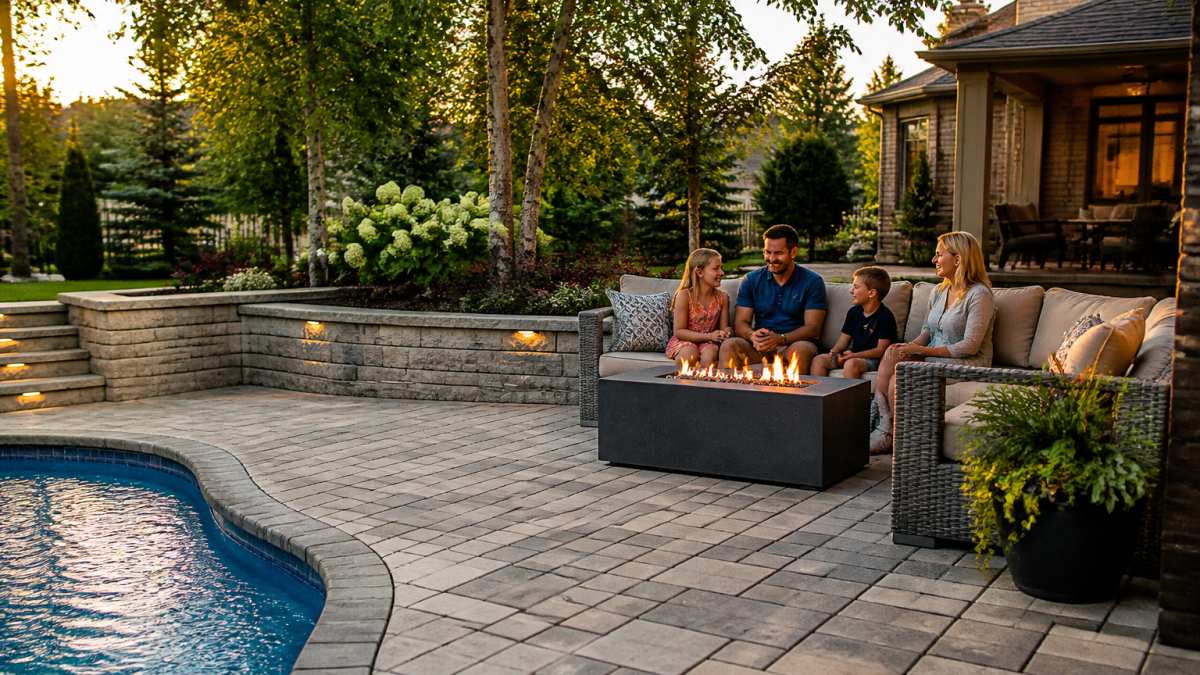
Ideas that hold up in practice tend to follow a few principles:
- Zone by use. Separate dining, play, and quiet areas before choosing materials. A single open lawn serves no one well.
- Work with the grade. Terraced beds and stepped patios turn a slope into a feature instead of a problem.
- Choose plants for the exposure. Full sun and deep shade need different species; matching them saves years of replacement.
- Repeat materials. Carrying one stone or wood tone through patios, walkways, and fences creates cohesion on a small budget.
- Plan for winter. Evergreens, structural hardscaping, and clear snow-storage zones keep a yard usable year-round.
A common mistake is copying a landscape image from social media without checking whether the plants or materials suit local conditions. Beautiful photographs from other climates rarely translate directly. Adapt the idea, not the plant list.
What Professional Landscaping Services Cover
Professional landscaping services can cover the full cycle of an outdoor project: design, construction, planting, and ongoing maintenance. The scope is broader than many homeowners expect.
A full-service provider may handle:
- Site assessment and grading
- Hardscaping such as interlock patios, walkways, and retaining walls
- Softscaping: gardens, trees, lawns, and beds
- Water features and pools
- Fencing, decks, and outdoor structures
- Seasonal maintenance and winter service
One team across design and construction can help keep the plan and the build aligned. Our landscape construction services cover the build phase.
What Landscaping Cost Depends On
Landscaping cost depends on site conditions, project scope, materials, and access, not on a single square-foot rate. Anyone quoting a firm number before walking the property is guessing.
The variables that move a project most:
- Terrain and grading. A flat lot is cheaper to build on than a slope that needs retaining.
- Material choice. Natural stone, interlock, and concrete carry different costs and lifespans.
- Access. A backyard reachable only through a narrow side gate slows every delivery.
- Scope. A garden refresh and a full pool-and-patio build are different projects entirely.
- Drainage work. Correcting water problems adds cost but prevents expensive failures later.
Pricing depends on the specifics of each property, so current figures are best obtained through a site visit and a written quote from Ciscon Landscaping. When comparing quotes, check whether base preparation and drainage are included, since omissions in those areas can affect how a patio performs over time.
Landscape Maintenance Through the Seasons
Landscape maintenance is the work that keeps a finished space looking finished, and it changes with every season. A yard that looks after itself in July needs active management in November.
Spring means cleanup, bed edging, pruning, and checking hardscaping for frost damage. Summer is about watering, weeding, and mowing on a consistent schedule. Fall is the critical window: leaf removal, aeration, and winterizing irrigation and pool systems before the first hard freeze. Winter shifts focus to snow removal, ice management, and protecting vulnerable plants and surfaces from salt and frost.
Skipping fall work is the most common maintenance mistake we see. Beds left full of leaves smother plants, and irrigation lines left charged can crack when temperatures drop. Our landscape maintenance services run through all four seasons so nothing gets missed between them.
Landscape Change, Climate, and Conservation
Landscapes change, and they are changing faster now. Shifting weather patterns affect which plants survive, how much water a garden needs, and how hard freeze-thaw cycles hit hardscaping. Conservation is no longer a niche concern; it is a design constraint.
Three practical responses make a difference:
- Plant for resilience. Species that tolerate both wet springs and dry summers handle variability better than fussy imports.
- Manage water on site. Rain gardens, permeable surfaces, and correct grading reduce runoff and protect foundations.
- Protect what exists. Mature trees and established soil take decades to replace, so design around them rather than clearing the site.
The Government of Canada’s climate data and projections are worth checking before committing to a long-lived planting scheme. For guidance on water-wise outdoor design, Landscape Ontario’s horticultural resources offer practical direction for local conditions.
Planning Your Outdoor Project With Ciscon Landscaping
Planning an outdoor project comes down to three decisions: what the space needs to do, what the site allows, and who builds it. Getting the first two right without the third rarely works out.
Ciscon Landscaping & Outdoor Living offers design, construction, and decoration as a full-service approach, which can reduce the need to coordinate separate contractors for grading, stonework, and pools.
You can browse our gallery of completed outdoor living projects to see whether our style matches what you have in mind. When you are ready to talk through your space, contact us to start the conversation.
Frequently Asked Questions
What are the different types of landscapes?
Landscapes fall into a few broad groups: natural landscapes shaped by landforms, water, and vegetation; built or human-made landscapes such as gardens, parks, and patios; and mixed landscapes where both interact, like a residential yard. Within these you will find mountains, river valleys, lakes, prairies, parklands, and regional landscapes that share climate and terrain. Most properties combine several types at once, which is why a design plan starts by reading what is already on the land.
What landscapes are found across the country?
The range is wide: rugged mountain terrain, prairie grasslands, lake country, river valleys, boreal forest, and coastal scenery. Each regional landscape brings different soil, drainage, and growing conditions, which directly affects what plants thrive and how hardscaping must be built. In Ontario, freeze-thaw cycles and clay-heavy soil are the two factors that most influence how a patio, retaining wall, or pool surround should be constructed to last.
How do I choose a landscaping company?
Ask for proof before price. Request examples of completed projects similar to yours, confirmation of insurance and any required licensing, and a written scope that names materials, timelines, and who manages each trade. Check whether the company handles design through installation or subcontracts most of it, since coordinating multiple crews is where delays usually start. A provider that shows local project photos and explains how it protects structures through winter is giving you more useful information than the lowest quote.
What does landscaping cost depend on?
Landscaping cost depends on project size, materials, site access, grading and drainage work, and how much design and project management is included. A simple garden refresh and a full pool-and-patio build sit at very different levels. Rather than quoting a figure, a reputable provider will assess your property and give a written estimate tied to a defined scope. Ask what is excluded as carefully as what is included, since removals, permits, and utility locating can shift the total.
How do I maintain a newly landscaped yard?
New plantings need consistent watering through their first two growing seasons, and hardscape joints and drainage should be checked after the spring thaw. Landscape maintenance then settles into a seasonal rhythm: cleanup and bed refresh in spring, pruning and watering through summer, leaf removal and winterization in fall, and snow and ice management in winter. Keeping a simple log of what was planted and when makes it easier to spot problems early and plan the next round of improvements.
Your yard is a landscape too, and it deserves the same care as the ones you travel to see. Ciscon Landscaping brings design, construction, pools, and year-round maintenance under one roof, with full project management from first sketch to finished patio. Get started with Ciscon Landscaping and turn the outdoor space you have into one your family actually uses.
